













Are garage doors dragging down your project’s thermal performance?

Story by
August 21, 2026
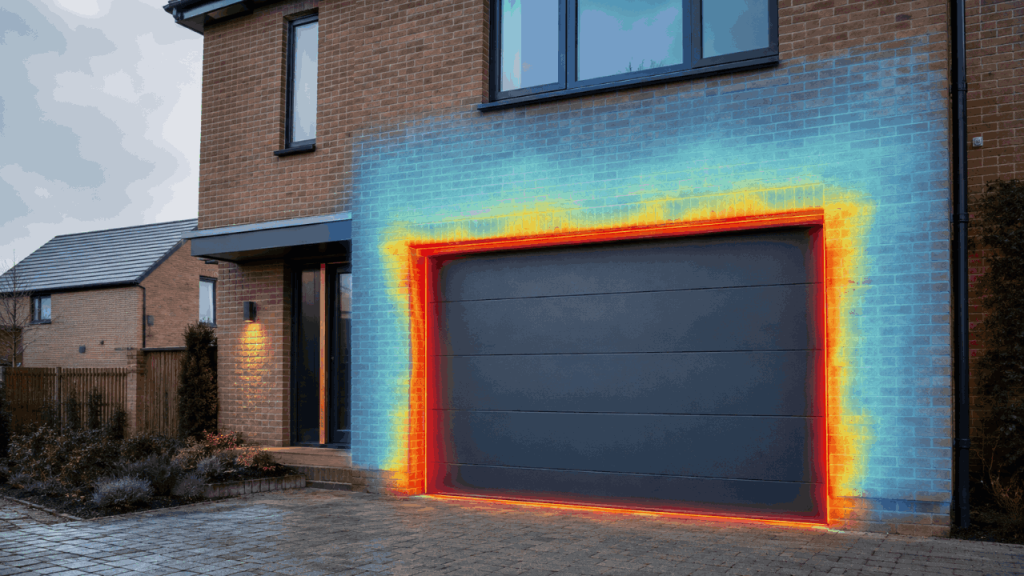
Are Your Garage Doors Dragging Down Your Thermal Performance?
Part L of the Building Regulations was tightened in June 2022. Walls, windows and heating systems have had most of the attention since then. Garage doors, though, rarely come up – yet they’re often the largest single opening in a building’s envelope, and an easy way to quietly undo the thermal performance built into the rest of the design.
What Part L Actually Changed
Approved Document L raised the bar on fabric performance across new and existing homes, as part of a wider push to cut emissions from new builds. Doors and windows are covered alongside walls, roofs and floors – every opening in the envelope now has to pull its weight.
Not Every Garage Door Needs to Comply – But Many Do
Compliance is dependant on the garage. A fully detached, unheated garage generally sits outside Part L’s requirements. But an integral or attached garage – built into the house, sharing a wall or a room above with heated living space – is different. That’s due to the door becoming part of the boundary of the heated envelope, and thus has to be accounted for accordingly. The same applies in full once a garage is converted into habitable space.
The U-Values That Define Compliance
Part L sets a maximum (backstop) U-value of 1.6 W/m²K for doors in new dwellings, with well-specified doors typically achieving 1.0–1.4 W/m²K. Replacement doors in existing homes need to hit 1.4 W/m²K. A standard, uninsulated steel garage door doesn’t come close to any of these figures – and most aren’t tested to a meaningful U-value at all.
How One Door Can Undo an Entire Build’s Thermal Performance
A single poorly-performing door can drag down an otherwise well-insulated home. If heat escapes directly through an uninsulated panel, then further heat is lost around the frame and lintel if that junction isn’t detailed properly. On an integral garage, that’s heat loss straight from a habitable space to the outside – undoing gains made elsewhere in the build. It’s a pattern garage door specialists Southern Doors see regularly on integral garages and conversions in the South East: a door chosen on looks or budget alone, with compliance only picked up once the SAP calculation comes back short.
What Needs Specifying
- An insulated sectional or insulated roller door rather than a standard steel one
- The fitted U-value, not just the centre-panel figure – the key for compliance
- Full Part L treatment for any garage being converted into living space, including the door or its replacement with an insulated wall
A Specification Partner That Knows the Difference
With Part L compliance now a routine part of the conversation on new-build and conversion projects, Southern Doors works with architects, builders and self-build clients to make sure the garage door is specified correctly from the outset, not fixed as an afterthought. Southern Doors supply and install Hörmann’s insulated sectional and roller garage doors – including the 42mm LPU42 (fitted U-value around 1.4 W/m²K) and the 67mm LPU67 (around 1.0 W/m²K) – across the South of England.